Saturday, September 3, 2016

An Office, A Piano, A School and a Concert

I can finally work!

In recent weeks I've been able to take advantage of a few opportunities, thanks to excellent timing and some very helpful people in the community. Always a good thing! As far as the timing, I was able to secure a space where I can work, plan and record music (and give lessons if I want) at any time that I wish and without distractions or interruptions. I spent quite a bit of time there when I was subletting part of the space from Shawn Dyer, filmmaker and computer guru (and, as it happens, an expert on Belgian ales). He vacated the space in the interest of financing a new vehicle, and as soon as the space became available I took over the lease. It's less distracting to write a blog post in this office space (which I'm doing right now) than doing it at home when my cat is sitting on my lap and demanding cuddles. Cuddling takes time. So does scratching her belly. So does napping. And watching TV. These are all distractions that I don't experience in a separate, quiet office space, and as such I've gotten a tremendous amount of work done. Yay for efficiency! :D

I was somewhat hesitant because of the cost, but the rent is extremely low because the owner knows me and he gave me a good deal, and the time I'm able to put in allows me to figure out how to make up those costs each month. I figured that since I'm paying more per month for an office space, I might as well invest even more money, and this leads me to my next acquisition...


The Yamaha AvantGrande N2 (a.k.a., "Zoey")


One of a few things that I felt was slowing me down in the progress towards recording is that if I used my old digital piano (the Korg) the sound quality would come out terrible. The only way I was able to get decent sound was by using a Yamaha DGX20-5 synthesizer and plugging it into my ProTools software. The sound was okay (I used this to record the "Heart of Storms" album) but the issue I've always had is that the keys on that particular instrument are not weighted, and they're "springy", making them difficult to play. Any pianist, I'm sure, will know how frustrating this would be. It was because of this that I was stuck in a "catch 22" situation where I either produce sub-par quality as far as recording, or spend money I don't have. Going completely "pro" when it comes to recording a piano involves actually getting a grand piano of some kind, making the room sound-friendly, and hooking up very expensive microphones to it. I've looked into this logistically, and financially, and I will probably end up doing this one day, I imagine, but at the moment it would take far too much money, lots of time, and an enormous amount of effort towards learning how to do this.


Despite these obstacles, I took steps towards this goal anyway, simply because I had to make a move, and that's when I stopped by Apollo Piano, a piano dealer in Chico. The woman who works there was fairly convincing, although a lot of it was probably the sound coming out of the seven or eight pianos that I tried out while I was there. To make a long story short I walked out of that building an hour later with a signed rental agreement for a Yamaha upright AvantGrande N2, a hybrid model that lets you play it like a real piano but also lets you plug into ProTools or even insert a USB drive, letting you record whatever you're playing and saving it as a MIDI file. It may be a possible solution to my logistics problem and I'm really excited about that prospect.

Aside from ignoring the people who've teased me for naming the piano (I mean, come on, what musician doesn't name his instruments?) I've already done a recording test, and so far I'm satisfied. If the recordings continue to yield quality it means that I can record my albums so that the sound will be decent and ALSO be able to play with weighted keys. This, again, would solve my catch-22 situation. In case you're curious, I do plan to continue a new-and-improved recording of Heart of Storms, but I'm focused on making a summer-themed album as well. Bet you didn't know that :D and yes, I'll have more details later. I'm still struggling with a name for this album, so I welcome ideas, as always!

And when it comes to the Yamaha N2, by the way, BOY HOWDY does it sound amazing! People should be able to tell this by the very fact that I just used the expression "boy howdy".


More Music Education for Chico!

After taking these steps towards my goals, and while testing out the new recordings, the woman who rented me the piano urged me to come and meet the owner of Apollo Piano. When I stopped by to meet him we discussed his plans to start a new music school in Chico, which he wants to call Yamaha School of Music. Even though my end goal is to be able to travel and perform on a regular basis, this idea excites me as well because it's an opportunity to continue saving money that I'll be putting towards later endeavors, and it's slightly more enjoyable than teaching people about verbs and adjectives. He has already expressed an interest in having me as one of the teachers, so I'm looking forward to seeing where this goes.

My hopes to tour and perform, by the way, are some of the few things that drove me to watch another soloist perform. And that brings me to my next adventure...


George Winston in Redding

George Winston
If you haven't heard of this musician he is an American pianist, guitarist and composer. He primarily plays on the piano and performs in the "new age" style that I often use (or neo-classical, contemporary, or what he calls "rural folk piano") as well as blues piano. I was lucky enough to discover that he was performing in Redding, so I jumped on it. The first reason I went to see him is fairly obvious -- I've been a fan of his since I was in my teens, and watching him play the song "Rain" on a YouTube video years ago was a "tipping point" which made me decide to leave the teaching profession and pursue music as a career. You can see a video of him playing this song below. It's one of my absolute favorites.


The other reason I went to see him is because I wanted to get an idea of how a soloist puts on a concert -- not just how he walks on the stage and plays the instrument, but how he works the audience, what he talks about, how he presents himself, etc., because I hope to do this one day and I want to get an overall picture of what that looks like. Of course, every performer does things a little differently, and I'm sure I will. Not to mention, many performers seem to have their own "shtick" or gimmick. There are a few things that I know I won't do (I went and saw Yanni perform in Sacramento four years ago, and he wore really tight pants. I'm NOT doing that).

George Winston (right) after I got his autograph 


Seeing as I've piled even more on my plate than I have before, I'm sure there will be much to discuss in future blogs. Comments, as always, are welcome, as are any comments or responses on my website forum, which you can go to here

Thursday, June 23, 2016

Leonard Cohen's "Joan of Arc" (How to write REAL lyrics!)

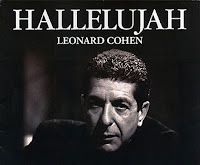
I recently wrote an arrangement of Leonard Cohen's song called "Hallelujah," and in the process I went back and also listened to another song of his, entitled "Joan of Arc." If you don't know who Leonard Cohen is, well, now you do. He's a songwriter who wrote a song called "Hallelujah" and also a song called "Joan of Arc." If you've never heard the song "Joan of Arc," well, it's a song by Leonard Cohen. About Joan of Arc. And if you've never heard the song "Hallelujah," then you're missing out, because it's quite catchy!

And, more importantly, even if you've never heard of the things I mentioned above, do not despair, as I intend to fill in all the necessary details. In any case, I decided to make this blog post about the song "Joan of Arc", and not "Hallelujah", for very specific reasons. I absolutely love both songs, but "Joan of Arc" has inspired me immensely since I was fairly young. To understand why, we need to understand a few things about the artist himself.


Leonard Cohen is not just a songwriter...

One of the things I admire about this particular singer is the versatility in his talent. He has worked as a singer-songwriter for decades (he's now 81 years old, and he has written/performed music his whole life), but what some people may not realize is that he's also an accomplished writer, poet, and novelist. He apparently started out wanting to be a full-time writer, but after not having enough financial success, he resorted to a second-favorite creative activity -- songwriting. This seems to have worked out for him, obviously, because you can find beautifully-written lyrics in many of his songs, which reflect his writing style very clearly.


Good lyrics? I'll believe it when I hear it.

This leads me to my next point, which has to do with an issue that I seem to have with music in general. Most people who know me also know that I really like instrumental music, whether it's classical, "modern" instrumental, "new age" or something like solo guitar music, or solo piano music. There are several reasons for this, but one reason is actually because I can't stand most lyrics. I'm cursed by having studied English (and linguistics) in college, having taught English for several years, and having learned to be extremely picky about language in general -- especially about language that's meant to be artistic. So, whenever I hear music that includes vocals, I want the lyrics to be poetic, original, free of cliches, vivid, somewhat mysterious, clever, catchy, meaningful, etc., and if the lyrics don't have these qualities, I get somewhat turned off. I'm a complete snob when it comes to this. When I listen to modern pop songs, especially the ones that get airtime on the radio, I often hear one cliche after another. As an example, there are probably a dozen songs with lyrics that, somewhere, contain the phrase, "Learn to love again". That's not original. It's been done countless times, and it took these songwriters almost no creativity whatsoever to write a line like this, because they're just spouting out some common phrase that's overused.


If I'm going to hear lyrics, I want originality. Something like this would be better...

Your words are a knife that has sliced into my veins. 
But I haven't bled completely dry. 
One day I will feel my pulse again, and I will find another smile. 
You are no longer alive in me. But I am still alive.

Now those are lyrics! It's original, it's vivid, and those particular phrases have probably never been used before. The metaphor has most likely been used plenty of times, but the words themselves have not been used verbatim. And, interestingly, this particular example of "good" lyrics has the same meaning as the example I used of the "bad" lyrics, containing the cliche love again phrase.

To summarize this point, lyrics have to affect me, really affect me, for me to appreciate them -- otherwise I'm just not impressed. They have to make me either see something, feel something, or they have to give me chills... something. You know, something other than getting me to roll my eyes :D This is not to say, of course, that poorly-written lyrics mean the music itself is bad. I am still guilty of listening to peppy, up-beat songs simply because the quality of the music is great, even though the lyrics might show complete lack of effort on the part of the songwriter.

So what is my point in all this? My point is that there are only a select few singer-songwriters who I admire for their writing ability, who I will praise for their word-craftiness -- because I am, as I said, such a stuck-up, snobbish, unfair lyric-judger. And my other point is that some of Leonard Cohen's lyrics, in my artistic opinion, are damn good. As I said before, this songwriter started out just writing, has published poetry as well as his own novels, and his first novel, Beautiful Losers, came out as early as 1966. His first music album was released less than a year after that. I find this intriguing because I'm generally very fascinated with this literature/music combination, and some of my past blog posts have explored this "dual" art form to some extent. Cohen explores topics in his literature that are also very relevant and relatable to many people -- love, relationships, human nature, suffering, religion, history, to name a few. I won't reveal right away whether I think he's actually a good musician, but I do think he's an excellent writer.

By the way, I happen to think he's an excellent musician! Did you see that coming? You didn't, did you? :D But enough rambling... here is what you need to know about this particular song.


Who was Joan of Arc?


Depiction of Joan of Arc at her execution
If you're a history buff, you probably already know the answer to this question. You don't have to know every last detail about European history to appreciate this song, but I will say that I greatly admire a musician who writes a song about a famous historical figure. (Again, a great example of originality.)

What's probably good to know, though, is that Joan of Arc was a peasant who lived in France, during the Middle Ages. France was fighting a war with England (The Hundred Years' War, they called it), and, apparently, Joan of Arc received "visions" from a bunch of angels, who all told her that she should go and support the King of France (Charles VII) and help him preserve France by fighting the King of England. Now, first of all, a vision from a bunch of angels? Maybe somebody slipped something into her tea, I don't know. But many people believed her, and they regarded her as a "saint", or someone who was sent on a mission by God. So basically they were crazy.

As a result of this, Joan of Arc ended up leading an entire army, at the age of nineteen, even though she had no military experience whatsoever. She took them to the city of Orleans, where, remarkably, the French succeeded. The bad part, for her, is that she was eventually captured by English allies (the Burgundian Faction) and because of the "visions" she had, the English captors believed that she was a witch. They also accused her of heresy, and a number of other offenses. The story ends tragically, of course, when Joan of Arc is finally burned alive at the stake, having been convicted of witchcraft and other "crimes" that they deemed punishable by death.

Leonard Cohen's song, "Joan of Arc," is about this particular historical event. The reason I love this song so much, though, is not just the originality of writing about something historic, but the way that Cohen wrote the lyrics. I first heard this song when I was pretty young, probably eleven or so, but it wasn't until later in my life when I looked at the words and realized how cleverly Cohen put the song together. As you can see below, the lyrics are actually a dialogue between Joan of Arc and the fire that's burning her. The moment I realized that Cohen had personified the fire, that he had made the fire able to "talk", was the moment I realized how talented of a writer he is.

The chorus of the song appears four times, and as you can see in the lyrics the chorus is nothing but a repetition of "la-la-la's" (no actual words), while all of the other lyrics are profoundly poetic. I realized, after some time, that the la-la-la's in each chorus was probably symbolic of Joan of Arc screaming and wailing as she gets burned to death. This realization, of course, hit me like a brick.


"Joan of Arc" lyrics
Leonard Cohen

Now the flames, they followed Joan of Arc
As she came riding through the dark.
No moon to keep her armor bright
No man to get her through this dark and smoky night.

She said, “I’m tired of the war.
I want the kind of work I had before.
A wedding dress, or something white
To wear upon my swollen appetite.”

La la la, la la la
La la la la la la… 

“Well I’m glad to hear you talk this way.
I’ve watched you riding every day.
And there’s something in me that yearns to win
Such a cold, such a lonesome heroin.”

“And who are you?” she sternly spoke
To the one beneath the smoke.
“Why, I am fire,” he replied.
“And I love your solitude. I love your pride.”
 
La la la, la la la,
La la la la la la...

“Well then, fire, make your body cold.
I’m going to give you mine to hold.”
And saying this, she climbed inside
To be his one, to be his only bride.

Then, deep into his fiery heart,
He took the dust of Joan of Arc.
Then, high above all these wedding guests,
He hung the ashes of her lovely wedding dress.

La la la, la la la,
La la la la la la...

It was deep into his fiery heart,
He took the dust of Joan of Arc.
And then she clearly understood,
If he was fire, oh, she must be wood.

I saw her wince, I saw her cry,
I saw the glory in her eye.
Myself, I long for love and light,
But must it come so cruel?
Must it come so bright?

La la la, la la la, la la la la la la, etc., 
to fade. 


This set of lyrics clearly differs from those of most modern songs, obviously. The idea of making something like "fire" an actual character, anthropomorphized and able to speak, is something you just don't see these days. There are also parts that seem symbolic, such as the repeated reference to Joan of Arc's wedding dress, and her plan to be the fire's "bride." Marriage, as we know, is supposed to be "forever," but in this case the "forever" part is actually Joan of Arc facing her own death.

There are several versions of this song, where one is obviously the original recording, but the version I grew up listening to is sung by the American singer Jennifer Warnes, as well as Cohen himself. Jennifer Warnes released an album of Leonard Cohen cover songs, in 1987, called Famous Blue Raincoat. In her version of "Joan of Arc" (which you can listen to via the link below), Warnes sings the part of Joan of Arc, while Cohen sings the part of the "fire". They take turns singing, and sometimes sing together. What intrigues me is that Cohen and Warnes are clearly "singing to each other" passionately, as if it's a romantic love song, but of course when you analyze the lyrics you realize it's far more tragic and gruesome than that, with this heroine being charred to death by flames. There's a brilliant irony to this, because the singing style is very flowery and romantic. Cohen's voice as the "fire" is also mesmerizing, and inviting, while she tells him "I'm going to give you mine to hold", as if they're going to lie together and cuddle in the moonlight. But, since we know the real situation, and the real outcome of the story, the irony of this just makes the song that much more powerful.   


One can see, I'm sure, why I decided to talk about this piece. As a writer myself, I find this kind of "musical literature" quite inspiring. In fact, using personification as a literary device, as Cohen does in these lyrics, is something that I have picked up and used quite excessively in my own writing (very much in the same way that Cohen does in this song), especially in my narrative poem The Lost Enemy, which you can learn more about if you'd like by checking out my blog post, Why Music Is Incomplete Without a Background Story (Part 1).

Below is a YouTube video of Jennifer Warnes' cover of the song. It gives you the lyrics, too, as the song progresses, and it shows you neat little paintings and photos that relate to each part of the story. Pretty neat stuff if you ask me. Hope you enjoy it as much as I do! Comments, questions and/or ideas, as always, are welcome :)


                                    "Joan of Arc" (Leonard Cohen and Jennifer Warnes)
                                               from the album Famous Blue Raincoat

Saturday, May 28, 2016

Music Goose Bumps Explained

What's with the music "goose bumps"?  Why do we get them?


After wondering for some time what this week's blog was going to be about, I came across an article from ScienceAlert.com that describes some plausible reasons, from a scientific perspective, why many people get "goose bumps" when they listen to certain types of music. This topic is somewhat similar to several of my previous blog posts, especially my post from February called How to Make Your Music More Emotional. For anyone interested in reading the article, I added a link to it at the end of this blog post. Physiological and emotional reactions to music is a favorite topic of mine, as regular readers surely know by now, so I figured I might as well continue the trend in this blog. Besides, once I came across what seems like a well-written and reputable article on the topic, I got too excited and just had to post an entry about it. So, here goes!


Goose bumps in general

I'm going to try and be brief about this because I don't want to get off on too much of a tangent -- but understanding the actual function of goose bumps involves my cat. Well, really it involves all cats. All you have to do is ask yourself, what does a cat do when it is scared? Its fur stands up on end (as does its tail). This is a naturally-occurring, involuntary biological reaction, and it increases the cat's chances of scaring off a predator. Its back also arches to make it look "taller". When an animal's fur stands up on end, the animal looks bigger, scarier, and more intimidating. It's a product of millions of years of evolution, and for most people this makes pretty good sense.

A frightened cat displaying its raised fur.
According to the Science Alert article, as well as other scientific journals, "goose bumps" in human beings are there for the same reason. We don't have very much hair (or "fur") compared to a lot of other animals, but the goose bumps we see on our skin is the hair on our skin standing up. Our biological ancestors used to have a lot of hair, so this might have been useful at one time. However, our goose bumps today don't actually serve any real function. We don't have very much hair, and the hair we do have that stands on end during these "goose bump" periods does not make us look any more dangerous or intimidating. Another function of the goose bumps, apparently, is that the raising of the skin "resets" our body temperature when there are changes in the outside temperature, helping to regulate our body's "thermostat". (This is why we get goose bumps when we're cold). But this is also useless, according to the article's author, because we've invented clothes.

For those who are curious, there are plenty of other examples in evolution where a biological feature or phenomenon has become useless and obsolete (our tailbone, men's nipples, to name a few). But I'm not going to get into nipples right now. Surprisingly, I find the topic of music far more interesting.


The "Sneak Attack" in music composition

Before going into how music is connected to goose bumps, I should clarify some differences in the terminology I use versus the terminology used by the authors, editors, and research scientists who are affiliated with ScienceAlert.com. I don't typically like to make up my own words, but I find my terminology to be a lot funner. (That's right, I said it). For instance, the goose bumps that occur when you hear thrilling or beautiful music is the result of something that scientists call "response to unexpected stimuli",  while I call it the "Ninja Sneak-Attack". I'm not a scientists, so I get to use much funner words for these concepts, although I am still a passionate advocate for doing your own research and ensuring that you're not just spouting off something that you've "read somewhere". I have to credit some people with their sense of humor, though, because according to this same article a few researchers have used the nickname "skin orgasms" to describe this goose bump effect associated with music, instead of the technical term (which is actually frisson). But whatever you call it, the question remains: why do we get these goose bumps, these "skin orgasms"?


Suppose you are alone, unaware that anybody is around, and someone walks up behind you and scares you. The hair on the back of your neck would probably stand up. This happens for the same reason that I just discussed -- your body goes into "defense mode," because as far as you know it could be something threatening or harmful, like a mountain lion. The key component in this occurrence is that it's unexpected. Researchers hypothesize that many other "unexpected" occurrences can have the same effect. So, when you hear something in a song or a musical piece that "violates" your expectations -- in a good way -- you get goose bumps. Hence, the Sneak-Attack.

I want to provide a few examples of this, but I first want to point out that, from an evolutionary standpoint, the goose bumps resulting from a piece of beautiful music have absolutely no biological function whatsoever. It's just a by-product of evolution that is now outdated. However, the pleasure we feel in our brains when having this experience is perfectly harmless (and, I would argue, healthy) and listening to music in general has been shown to be very therapeutic in many ways. So, goose bumps or not, it's one of many reasons to take advantage of a pleasure that we can access, for no other reason than to enjoy life, and to benefit from these therapeutic effects.

Above: The late Oliver Sacks, neurologist and musician, experiencing the joy of listening to one of his favorite pieces. The photo was used as the cover on one of his books, Musicophilia, published in 2007.


Musical ninjas through the ages

And now to the examples of composers and artists who use this "Sneak-Attack" method. Bach did this constantly. I don't think he called it the Sneak-Attack, but he did it. It's one of the reasons why he is so well-known. From the composer's perspective, the trick is to establish a noticeable pattern, like a theme, a motif, or some sort of catchy melody, and nowadays this is often referred to as part of the "verse." Most listeners will quickly become familiar with this pattern when listening to the song, even if it's subconscious. After establishing this melody, the pattern can be repeated yet again, but this time there is some kind of unexpected change, variation, or subtle difference in the pattern that the listener does not quite expect. It's this element of slight unpredictability in music that stimulates a part of the brain, causing the "surprise," thereby a sense of pleasure, and incidentally produces those goose bumps (although the goose bumps themselves, like I said, serve no real purpose). Bach was known for creating these "surprises" in his melodies, and he was a master at it. His music was enormously popular during his lifetime because of his ability to do this, and to do it incredibly well. The challenging part of creating this effect is that you don't want too much unpredictability, because then it will just sound random and meaningless. On the other hand, if it's too predictable, it may sound boring -- much like a movie that is too predictable, where you already know what's going to happen (take a poorly-written and cliche romantic comedy, for instance). The trick is to find that "happy middle ground" in music, where you have some sort of pattern, yet you introduce just enough unpredictability in certain parts of the song to generate that perfect amount of "surprise".

Johann Sebastian Bach

Other examples where this is done in music:

1. Frederic Chopin does this in Nocturne No. 19 in E minor (video below). There are two notes in the beginning of the verse, and the second note is sustained for a bit (first played at 0:08 in the video), which is played with the right hand, and then there are three notes that follow. This is a simple motif that gets repeated each time the verse starts up again. The fun part of this is that, if you're hearing this piece for the first time, you won't always be able to predict exactly when the verse starts up again. The composer "sneaks" the verse in unexpectedly, or somewhat earlier than expected. This happens at 0:33, 1:36 and 2:04 of the video. One of the ways that Chopin accomplishes this is that he adds other stuff in between the repetitions of the motif, i.e. between 1:08 and 1:35 the song lingers a bit, with basically the same rhythm and tempo (sort of like a "bridge" to a song) and it keeps you guessing as to when, or whether, the verse will repeat again. I like to do this between the bridge and/or climactic part of my songs, and then revisiting a verse towards the end in a more dramatic way (i.e. in a different key or with embellishments). A great way to do that is to re-create part of the motif in the last part of the bridge, and then repeat that motif and sneak the verse in there, creating a subtle transition from the bridge back to the verse. I've done this in many of my songs and people seem to like it. Again, violating a listener's expectations just enough is the key to tickling that musical funny bone.


                                     Nocturne No. 19 in E minor by Frederic Chopin

Speaking of climaxes, Chopin puts one in this song. You may notice that, starting at 1:55, the music gets very dramatic, again creating that feeling of anticipation in the listener to where he or she will not quite be sure when the verse occurs again. Beethoven did this a lot as well. This is a similar effect to a person watching a horror movie and not quite knowing when a creature, monster or "bad guy" is suddenly going to jump out, even though you know it will probably happen at some point. Building anticipation is just another way that these goose bumps form. The Science Alert article discusses this quite thoroughly.

2. Christina Perri does this in her hit song, "Jar of Hearts". She uses a technique called a "chord substitution", where the listener expects to hear a certain chord (based on an established musical pattern in the song) but a different chord is played instead, slightly "surprising" the listener. In the original version (where Christina Perri is singing) the chord substitution is very quick and subtle, partly because she drags her voice a lot and sings over the piano chords with a rather raspy voice, so it's hard to catch. Christina Perri might not even know that she's using this technique in her song because songwriting for many people is far more intuitive, but I notice it because I'm a big nerd who likes to analyze everything. Anyway, there is a piano cover of this song that I absolutely love (below) and you can hear the chord substitution a lot more easily. The chord substitution first happens at 1:01 in the video. Most listeners will expect to hear a major chord because the pianist is already playing in the key of E flat major, and the chord he's using right before 1:01 is A flat major. It changes to a minor chord instead, which a first-time listener will usually not expect. This happens again at 1:14, 2:10, and 2:34.

"Jar of Hearts" by Christina Perri (piano cover)

Below is an excerpt from the lyrics in Christina Perri's original version. I underlined the parts where the chord substitutions take place (from A flat major to A flat minor).

     And who do you think you are, running around leaving scars?
     Collecting your jar of hearts, and tearing love apart.
     You're gonna catch a cold, from the ice inside your soul,
     So don't come back to me. Who do you think you are?


3. Whitney Houston does this with the famous key change in the song "I Will Always Love You." The key change in the middle of the song is so effective that now people use it as a parody in comedy films and TV shows, creating a comedic "dramatic" effect whenever someone falls in love or if there is "love at first sight." Key changes in the middle of a song are very popular, and they are tremendously effective; the listener generally does not expect it, and it surprises them, usually to their delight. It sort of "wakes up" the listener. This technique was very popular with 80's and 90's pop music. Michael Bolton was a fan of doing this in his music, and our old friend J.S. Bach did this as well. In Whitney Houston's hit song (below) the key change takes place at around 3:07, following a gap of complete silence (creating a great deal of anticipation), and the original key she was singing in, which was in A major, goes up by a major second, or a "whole step," as some music theory nerds might call it, and the remainder of the song is sung in B major instead.

"I Will Always Love You" by Whitney Houston


4. Ludwig van Beethoven: I mentioned this guy before. Aside from the fact the he (and others, including Bach, Mozart, and a host of other classical composers) used key changes very effectively, he was also very skilled at creating a simple motif and repeating it multiple times throughout a piece, but with an enormous range of variations. A perfect example of this is the first movement of Beethoven's famous 5th Symphony, which boldly begins with four hard-hitting notes: "Ba-ba-ba baaaaaaah!" This motif is often known as the "Fate Motif" because Beethoven apparently described it as "fate knocking at his door". One reason why this piece is so well-known is because you will hear that same exact pattern (the four familiar notes) again and again, throughout the entire song, but with many different variations. Sometimes the variations of the four notes are loud, sometimes they're quiet, sometimes they're played in the melody, sometimes they're played by the cellos in the background, etc., but you hear it again and again. Try listening to it and count how many versions of "Ba-ba-ba baaaaaaah!" you hear throughout the song, and you will run out of fingers. Or, play a drinking game and take a shot every time you hear it; you will be smashed before the piece is over. Beethoven's remarkable use of variations in this simple motif is one of the ways you can keep the listener "guessing" and, again, get those goose bumps on your arms. 

Just an FYI, there is an on-going written commentary about the music in this particular YouTube video, obviously created by some big nerd like myself. For the sake of simply listening to the piece and noticing the variations I discussed, the written commentary in the video can be ignored (especially since it changes so rapidly) unless you really want to read it. 

That being said, there is no better example to end on than Beethoven's famous masterpiece. But seriously, be careful if you try that drinking game, because you really will be two sheets to the wind by the time you're done. ;)


                                      Beethoven's Fifth Symphony (1st Movement)


Sunday, May 15, 2016

Yes, your taste in music is largely based on your culture...

As some people know, one of the subjects I've been most interested in lately is how music affects the human brain. I found out very soon, and to my delight, that there is a field of study that relates to this, called psychoacoustics. There is a developing science in which researches are devoted to finding out exactly how, and why, music affects people in certain ways (i.e., Why do some types of music make people feel energetic? Why does it make some people feel happy, sad, soothed, or relaxed? Why does it make some people cry? etc.).


The study of psychoacoustics, however, spans more than just the study of how our brains respond when we hear a song that we like. It includes the brain's responses to all sound, and not just music. Experts in this field of research may, for example, study the way a human brain responds to the sound of a baby crying, or someone saying "I love you", or the fact that the sound of other people laughing can cause you to laugh also. From what I've gathered, sound seems to be deeply connected to triggers of human emotions.


There's more to it than just a reaction in your brain

I don't pretend by any means to have an authority when it comes to science, nor am I an expert on the human brain. I just look stuff up because I'm bored, or because I'm putting something off that's way more important but it's crap I don't really want to do. So I found out while browsing around that, apparently, our appreciation of music is not just a result of hearing a collection of sounds, but also a result of a cultural influence. Even more so, it's a result of the culture we were raised in. The interesting part about this is that when it comes to people's favorite music, they often can't explain why they like it, other than saying "because it's just awesome." I once asked a friend of mine why she liked country music, and this was her response:

     "Because, it just... it's just awesome, that's why. It's country. It's just awesome."

Here are other common answers to the question, "Why do you like this type of music?"

     "Because it just rocks. I love it!"
     "Because you can totally dance to it, that's why!"
     "Because I can just, ya know, let my hair down and rock out, you know?"
     "Because, everything, it's just like rich, you know?"
     "Because it's the Beatles, that's why!"
     "How could you not like this music?"
     "Because it's ________________!" (insert name of band here)
     "Because, I could just listen to it all day."
     "Because I just feel so relaxed when I hear it."
     "Because it just, like, puts me in the zone, you know?"
     "Because it makes me want to cry."

From a completely objective and logical point of view, while I thoroughly understand and respect the feelings these people are experiencing, none of these responses really answer the question. Before going into the cultural aspects of it, I want to mention again that there are reasons why these people love certain types of music, and that a lot of it still does have to do with the brain. If you understand music theory, and you understand certain things about the brain's responses to anticipation, surprise, subtlety, key changes, and sound perception, then you can start to understand why. I can very easily sum up, for example, why Adele's new song "Hello" is so popular. It has partly to do with the primary beats in the rhythm starting out as tied notes with different time values, partly with the chord progressions, partly the timbre in Adele's voice (as well as her range), and partly the melodic contours in the second part of the verse and in the chorus. So a lot of it is the brain. But enough about that -- we're here to talk about cultural influences. So let's talked about my favorite stir fry.


Beef: it's what's for dinner! 

Depending on your age, you may or may not remember a commercial back in the 90's that was funded by the Beef Checkoff Program, where they showed people cooking a bunch of beef-related dishes (you know, stir fries, stews, soups, kebobs, steaks, etc.), and there's this music in the background that's very fast and upbeat. In the end of the commercial, a man's voice comes on and says "Beef: it's what's for dinner!" followed by three loud, punchy notes (with the orchestra and kettle drum) - boom, boom, boom! If you've never seen the commercial, you can watch it below.


The reason I bring this up (yes, there's a reason) is because of the music that was used in this commercial. The music is from a classical piece called Rodeo, by a 20th-century American composer named Aaron Copland. He was very popular, successful, and wrote hundreds of pieces, including soundtracks for films that came out in the 90's. Chances are, you've heard some of his music and don't even know it. I admire this composer a lot, but when I listen to this selection from Rodeo I have trouble taking the piece seriously, because all I can think of is steak. You can watch a live performance of it below, and if you are one of those people who was exposed to this commercial as a kid, it might be hard to watch it without thinking about that same beef commercial.


This is a great example of how culture can shape our perception and our appreciation of music. Food is obviously a big part of any culture (and for the American culture, TV advertising is too) and instead of just hearing an upbeat tune by Aaron Copland, whenever I hear this piece I just want to go out and have a barbecue.


Oh, the good old days...

Keeping in mind this cultural influence on musical taste, you can find more examples of it by asking people in their 50's and 60's to talk about the music they liked when they were kids. I guarantee that you will run into at least a few who get nostalgic and smile. Some people will not only describe the music they liked but they will tell you little stories about what they did while they were listening to it. You know, something like this...

"Oh yes, I remember  listening to Simon and Garfunkel. I must've been 23, 24. I was with my    
buddy Hank, and his girlfriend, and we were sprawled in the back of a Chevy when we watched
them live. It was awesome. Everybody cheered and sang along. They played 'Homeward Bound,'
one of my favorite songs, and my friends and I were completely hopped up on acid. Great times!"

Simon and Garfunkel in concert

You will hear this kind of rhetoric quite frequently when you ask people of the older generation about their musical tastes. This is because our tastes in musical genres are heavily influenced by our upbringing. Not only does music stimulate certain parts of the brain that make you enjoy it, but your brain is "molded" and formed in such a way that you will end up liking the type of music you were exposed to when you were young. People overwhelmingly love the types of music they do because it's nostalgic and it reminds them of a "different time". Almost everyone I know that likes country music likes it because they listened to it (and their parents listened to it) growing up. I never listened to country music as a child, so I don't happen to care for it. From a strictly music theory perspective, I have an idea as to why people enjoy most country songs (aside from their upbringing) but listening to it does nothing for me.


I like Pink Floyd, and it's all my dad's fault...

It's fairly easy for  me to come up with anecdotal evidence for this argument. I was exposed to certain types of classical music as a child, which explains both why I get into a "trance" whenever I hear certain types of classical, and why I get enormously (and delightfully) distracted during movies because of the soundtracks in the background, and why a lot of the music I write on the piano has heavy classical undertones. But I also love Pink Floyd, as well as the progressive rock group The Alan Parson's Project (which are both very similar). Also, I absolutely love Steve Winwood. The question is, why do I like these groups so much? Well, here's a hunch: my father listened to these groups a lot in the house when I was growing up. I was exposed to them early on, so now when I listen to these bands I get nostalgic, and sometimes even homesick for the town in Iceland where I grew up. I also found The Alan Parson's Project to be a great band because they incorporate some features of classical music into their songs (The Moody Blues does this also), and a lot of their songs are purely instrumental.

When I listen to Steve Winwood, the music triggers something in my brain that instantly makes me feel nostalgic, energetic, happy, and blissful -- the same way a country music lover feels when he or she hears some sappy song by Garth Brooks. People's brains develop differently, and it's clearly a part of the exposure they had when they were kids. My appreciation for this particular artist, however, has caused me some embarrassment. My brother once caught me dancing to Steve Winwood's music when he walked into my bedroom. He said that I looked like a turkey on hot coals. I mean, I was thirteen -- I do not do this anymore and you can't prove it. And, more recently (I won't specify when) a roommate of mine came home one day and heard me singing to the song "Don't You Know What the Night Can Do" while I was in the shower. Even more embarrassingly, I was singing it loudly, and the frightening part is that I can't sing very well. To be fair, I thought I was alone. My roommate is now traumatized for life.

                          "Don't You Know What the Night Can Do" by Steve Winwood


I tried to listen to Tchaikovsky, but all I could think of was the Roadrunner from the Looney Tunes

I won't say that this has "ruined" some people's perception of classical music, but children's cartoons have definitely shaped some people's reaction to it. First and foremost, I need to clarify something that many don't seem to realize: "classical music" is not just one type of music. A few people seem to think that you either love classical music or you don't, and I completely disagree. There are some types of classical music that I can't stand. Saying "I like classical music" is kind of like saying "I like rock and roll." It's not very specific. There are many different types of "rock and roll" (pop, classic rock, blues, punk rock, metal, soft rock, etc.), many of which a person can love while that same person can dislike another type. The same is true with classical music. Opera, for instance, is a type of classical music, and there are people who can't stand opera but love Beethoven. Johann Strauss' waltzes are a part of classical music too, and many people don't like those pieces but they love Mozart. There is a huge variety of classical music that many people in the modern age don't seem to think about. Also, the span of time that classical music takes up historically is far, far greater than that of rock and roll. When you really look at it, classical music is not so much a "genre" of music, but more of a historical time period in which a whole bunch of music was written. To be more specific, music from the Rennaisance era (15th-17th century) sounds very different from the music in the Baroque period. There's lots of music from the Baroque period that I also don't particularly care for.

Some of the music that I do absolutely love comes from the Romantic era. Compared to music from the other "periods," this music is more dramatic, more dynamic, more daring, has more variety (the piano has been introduced, there are more brass instruments, more percussion, cymbal crashes, etc.,) and more like the kind of music you might hear in a movie soundtrack. Some of the earlier stuff has less variety. You have to realize, for example, that the music of Antonio Vivaldi (famous for composing The Four Seasons) was all written before the piano was even invented.

John William's music, on the other hand, whose work includes the soundtracks for films like Star Wars and Jurassic Park, writes pieces that are much more in the style of Romantic-era classical music. Some of my favorite composers from this era include Sergei Rachmaninoff and Modest Mussorgsky. So keep in mind that listening to a single piece of classical music will not represent the full spectrum. It would be like listening to a reggae song and saying, "Nope, I don't like rock and roll at all."


Okay, now back to the cartoons. If you are like me and many others, you may have gotten up on Saturday mornings to watch cartoons in your pajamas as a kid. During my cartoon-watching phase, I watched the Looney Tunes episodes, one after the other. If you also watched these shows, you were exposed to an enormous amount of classical music without realizing it, because they used this music as the soundtracks in those cartoons. When I was a little older than my cartoon-watching years (sixteen or so) I was living with my dad and my stepmom, and I remember listening to Tchaikovsky's first piano concerto on my dad's CD player. I was taking piano lessons at the time, and my piano teacher wanted me to listen to this piece so that I could get inspired and think of new ideas for my compositions. Tchaikovsky's first piano concerto, by the way, is a very dramatic and epic-sounding piece, with a beautiful and punchy-sounding rhythm on the piano, especially in the beginning. It's one of my favorite pieces.

Out of curiosity, when I was listening to it in the living room, I asked my brother what he thought of it, and his response was: "It makes me feel like I'm watching a cartoon."  And there you have it -- upbringings and cultural surroundings will mold your brain and musical tastes.

                                            Tchaikovsky's Piano Concerto No.1


Apparently, Yanni writes music that sounds like movie soundtracks

I was reminded of my brother's response to the Tchaikovsky piece when I got a similar reaction from a friend of mine. I was in my car with him and I was listening to a very popular song by Yanni called "Santorini". It's sort of his standard "opening piece" whenever he has concerts, and he performed this piece with his orchestra when I watched him live in 2012 (yes, he has his own small orchestra). As soon as my friend heard it, he said, "This sounds like the opening to a movie." He's a fairly avid movie-goer, and so this would make sense. But the interesting thing is that the idea of that particular song being a movie soundtrack (which it could very easily pass for one) didn't even occur to me. I'm just so used to hearing the song as it is, by itself, with all the instruments and the percussive qualities of the piece, etc. It's just another example of how people's individual experiences shape their reactions to hearing a song.

                                                        "Santorini" by Yanni

The diversity that exists among people's musical tastes, their reactions, and their associated upbringing that ties into them further solidifies the notion that one type of music isn't necessarily "better" than another. It's also why I immediately dismiss the claim from anyone who thinks, for example, that "classical music is the finest of all music", or claims from others who make statements such as, "If it ain't country, it ain't music." There is no such thing as a superior genre, and the science behind it confirms this. The genre that you like the best is the best genre, for you.

The exception, of course, is Steve Winwood. I mean, come on... if you don't like his music then there's clearly something wrong with you ;)

Saturday, April 30, 2016

Questions for Music Teachers

Exceeding expectations

The original reason why I first decided to offer piano lessons is because I figured it was a decent way to make some money on the side while pursuing my career in other facets of music (performing, composing, selling my music online, etc.). The other reason is that it's a good way to network and connect with local musicians. The idea was that I would have a couple of students, maybe three, and that I would meet them once a week to make a few bucks and help pay the bills.


The first music student that I ever had was in 2011, and it was my friend's 10-year-old son. My friend knew how much I loved music and composing, and it was partly his idea for me to teach piano lessons, so he told me I could "try it" on his son just to see if I liked it. I only charged my friend $15 per lesson, because it was my first student and we considered it a "Guinea pig rate". This worked out fairly well for a while. I was living in Quincy at the time, and even in such a small town the word went around fast. After I had been teaching my friend's kid for a couple of months, I got a second student. News travels fast in place like Quincy, so that worked to my advantage. I have since then moved to Salinas and then to Chico again. 

Both the students I had in Quincy worked out well. The first one learned a few of the basics (I only taught him for a few months) and the other one learned enough to where we actually had a small, informal recital at his mother's house. The experience was enjoyable enough for me to seek out possibilities to teach piano lessons in Chico, after moving there from Salinas. What I didn't expect is that I now have 10 students -- more than I expected, initially -- and this has kept me extremely busy because I have two regular day jobs on top of this (teaching English as a Second Language and substitute teaching for Chico Unified), and all of this is in ADDITION to trying to keep up with creating, performing and recording my own music, while maintaining my new website, etc. 


Row boats have nothing to do with this

Don't worry about the unrelated heading title above, it doesn't really relate to the point I'm making in this part of the blog. What I really want to point out is that there is a possibility for me to quit my English teaching job and try to take on a full load of music students, even though this is risky financially. It's a financial leap of faith, more or less. It's kind of like sitting in a row boat, and everything is fine and dandy, and then you try to stand up, and you try to step into another row boat that's right next to it, and you're basically trying to safely get into the other row boat without falling in the water. It's exactly like that, except that I've seldom been in a row boat, and boats in general have absolutely nothing to do with music. Anyway, taking on a full load of music students is not exactly where I was headed with my musical pursuits, nor is it what I expected. The word went around and it just sort of happened. Whether or not I want to take on a boat-load of students (sorry, I had to) meaning that I would end up accumulating 30-40 students, or even more, is not actually the issue I want to discuss in this blog. So basically I just filled your head with a completely useless analogy about row boats.

What I actually want to do, now that I have more students than I anticipated, is pick the brains of other music teachers a little bit. I've had one thing going for me, which is that I've had a little bit of regular teaching experience already, with a different subject (English). This has made the patience factor a non-issue for me. Those who have never tried to teach a kid to play an instrument will quickly find out that it takes an enormous amount of patience, and my prior teaching experience prepared me for this. Either way, I feel like a lot of things have worked with regard to my teaching approach when it comes to private lessons, and I've learned a lot in the five years or so that I've been doing this. Experienced music teachers are welcome to comment on this if they wish, but what I'm still curious about is:

1) Are flashcards a healthy/productive way to get the kids to learn their notes? I've tried this a number of times and it does seem to work for those who actually quiz themselves with the cards, but I've heard a few people say that flashcards shouldn't be used.

Flashcards used to train students to identify different notes
2) I've had a couple of students who figure out the notes by looking at the finger numbers on the sheet music, instead of looking at where the notes actually are on the staff, and thereby "cheating". One student did this for months before I realized it. Thoughts?

3) I use the Alfred's method as part of my curriculum (do you even call it a curriculum?). I hear great things about this publication, which is part of why I use it, but many of the songs in the book are regarded as "old-fashioned", trite and "cheesy," like a waltz you might hear at a carnival. I've been somewhat successful about giving kids a heads-up about this, which works to some extent, but are there supplemental publications that I can use that include pieces which are, shall we say, more modern? Children definitely seem to benefit from the songs featured in the Alfred's method, it's just that some of them (especially the teenagers) seem to roll their eyes at the songs. I'm really interested in people's thoughts on this because a few of the songs that are in the last half of the book ("On Top of Old Smokey," "O Solo Mio," "Jericho," "Greensleeves," "Go Down, Moses", "Scarborough Fair," and "Raisins & Almonds,") seem more popular and most students actually like them. These later songs seem more "serious" and not as corny, so naturally I'm interested in the idea of including similar styles of songs earlier on in the Beginner Course.

4) What are some ways that I can make the learning of the five first notes (C, D, E, F and G) more interactive and fun for the younger bunch? I have a five year-old, and he has struggled somewhat with just knowing the letters, let alone making a connection between these letters and pressing a certain key on the piano. Even in my several years as a school teacher I never worked with that age group, so this is slightly further away from my element than what I'm used to.


Ideas are brewing

Relax, I'm not going to use a coffee-brewing analogy to describe the process involved with my ideas. But I did speak to a teacher at The Music Connection, and she has more than 40 students. Even if she charged as low of a price that I do, she would still be pulling in a comfortable $3,800 a month, which is higher than the salary I was making as a middle school teacher in Salinas. And she undoubtedly charges a much higher rate than me, so she could very well be clearing $4,000 a month, even after taxes. Money isn't everything, of course, but pursuing something you love to do and dumping a job that you don't love as much, in the interest of still being able to put food on the table, is something worth investigating. Besides, coffee is getting really expensive. Did you know that a "tall" house coffee at a Starbucks used to be a dollar, and now it's like $1.95? That's 2 minutes and 30 seconds worth of a half-hour piano lesson!

But all coffee aside, I spoke to this teacher for a good half hour or so, and part of her success is that she teaches multiple instruments, including not just piano but also guitar, ukulele, and some brass instruments, as well as voice. Now, if I try to sing, I sound something like a dying whale, or (in the words of "Penny" from a Big Bang Theory episode) a cat being run over by a lawnmower. So I don't think I have any business teaching people how to sing. But my experience with the violin as a kid may be a more promising situation, meaning that if I wanted to expand my teaching services, I might just "have to" get my violin repaired and fixed up, and buy a new bow, and I might just "have to" brush up on my violin skills by practicing it at home (darn) along with the piano (darn) so that I can also offer beginner-level violin lessons and get more students that way (darn). Variety in a job is good. It's kind of like tasting different blends of coffee, with all the different flavors they have.


Thanks in advance for any and all thoughts, comments, inquiries, insults, etc. I'll be posting part of this blog on my discussion forum on the ThorGunter.com website as well, so comments on it are also welcome!
  

Sunday, April 24, 2016

Live Performance Updates, Advertising for Shows, et al

Okay, I'm going to be completely honest -- I don't actually know what "et al" stands for. I just know it means "and other stuff" and I've always wanted to use it. When I first started copyrighting my music, the Library of Congress in Washington, D.C. actually used this abbreviation to describe my piano album. They called it "Hailstorm at North Lagoon, et al", using the title of the first song and then just said "other stuff". My first reaction was, "How dare they?" because I didn't actually know what the abbreviation meant. I don't really know where I was going with this, except that I really hope I used it correctly, and adding a third item would have created way too long of a title.

In any case, I played a show at Wine Time last weekend, which I can touch on briefly, but I also hope to mention a few things about advertising for my shows. I wanted to talk about piano lessons too, but I'm planning to include that discussion in a future blog. So really, just a few things about the Wine Time show and advertising, and a little bit of the "et al".


My new relationship

The fist thing I want to share is that I recently rented a Roland PA system (just one speaker) from The Music Connection, the music store in Chico where I teach my lessons and buy my music equipment (or occasionally loiter). I had been using a mini-amp that hooked up to a microphone, which usually worked well if there was a small-ish crowd. But sometimes there are large crowds at Wine Time and I wanted a better sound anyway. The rental is cheap, but to buy the system is $600, which is well worth the money and in my future for sure. I was so impressed and enamored with the sound quality that I went on Facebook the same day (I'm not making this up), created a brand new Facebook profile, put a picture of a Roland speaker as the profile photo, and wrote "Roland Speaker PA" as the profile name, as if this was an actual person. I then signed off, signed onto my own Facebook account and declared that I was "In a Relationship" with the Roland sound system. That's how much I liked the sound quality (embarrassingly enough, I posted something along with this new "life event" saying that I was spoken for and that the ladies were flat out of luck).


Before making any judgments, you should know that the speaker really made the music sound better. I got feedback from a few friends saying that it sounded crisp and clear, with no distortion, so I was excited and will be renting this system every time I do a performance, assuming I haven't yet bought it. I got a lot of "hahaha's" in the comments from other Facebook friends, but the really funny part of this is that it took a surprisingly long time to make that Facebook profile. I had to go to the original Fabebook home page, pretend to be another person, start filling out all the information (including the gender, which I filled in as "Female"), had to use another email address besides my own (they won't let you make two separate Facebook accounts with the same email), and I had to go to Bing Images to find a picture of a Roland speaker that resembled the one I rented, which was harder than I expected. I then had to sign out, sign into my real account, search for myself, add myself as a friend, sign out, sign in as "Roland Speaker" and accept my own friend request, sign out and back into my real account before finally declaring a relationship with myself, and then go back once again to accept that I was in a relationship with myself and that I, and myself, were indeed in love.

I won't go into too much information about the suggestions I got from my peers, regarding this life decision ("What is wrong with you?" "Have you ever considered therapy?" et al) but I will say that this entire process of pretending to be a separate entity and confessing my own love took an entire 45 minutes on the computer. I didn't add any hashtags to this, although I believe some have started their own... you know, #PASpeakersCannotConsent,  #DontYouHaveAnythingBetterToDo, among others.

Some people have said it won't last, but whatever the case may be, the sound system is great and I think I played a pretty good show. A group of my friends showed up as well and showed their support. One of them tried to do seductive poses while rubbing his chest as I was performing, but I'm going to pretend that didn't happen.


Advertising planned for Thursday 4/28/16 (tentative)

In order to book shows I obviously have to put in substantial effort to advertise, and I've done this quite a bit in the past. I don't particularly like doing it, because I'm just not a "salesman" by nature. But until I can throw money at someone (ha!) and actually hire a person to do this, I don't have much of a choice. The few venues in Chico where I've been successful (Monk's, Wine Time, La Rocca, and the Interfaith Council of Chico) all resulted from me simply parking my car, walking around town with business cards in one hand, Demo CD's in the other, and just walking into places. I plan to do this again this week (hopefully Thursday). I rarely get hits from people finding me online, although the people at the Rock House in Yankee Hill discovered me via an ad on Craigslist. However, when I do advertise in person it allows them to go online and find me so they can listen to more of my work. So far I've learned a few key things about this whole process, in case other budding musicians are interested in doing gigs in town. I am in no wise an experienced PR guy, but for what it's worth, this is what I've learned so far:


1) Walking into the place where you want to play, and meeting the person (you know, in person) is the best way to introduce yourself. When they see your face, and your smile, they remember you. I also find it helps to dress up a little. Not super fancy, but professional. Every time I walk into a place to check out a possible venue, I ask to speak to the manager, and when the manager arrives the first thing he or she does is look me up and down. They want to see how serious you are and whether you're really a legitimate, working musician.

2) If you don't have a Demo CD they won't even look at you. Almost inevitably, in every venue I've gone to, the manager or owner always asks for a Demo CD. It's usually the first thing that comes out of their mouths. I also give them my business card so that they have a way to contact me. If you don't have a Demo CD, they won't bother. Restaurant managers are busy. They don't have time to research you on the Internet to try and find a music sample, and they aren't just going to take your word for it when you say "I'm good." A place like Chico, especially, is filled with musicians. Not only is the town filled with musicians but it's also filled with wanna-be musicians. Owners and managers need to hear your music right away before they can even consider dumping a bunch of money to have you sit in their restaurant and play an instrument.


That's the other thing. People are not going to spend any money on you unless they become convinced that they will make that money back, and will make more money on top of that. That means your music has to bring in crowds. The nice thing about fancy restaurants is that they're expensive, and this means that even if your music brings in an extra four or five patrons, it will offset that cost for them and a little bit more. That's what they want. From the viewpoint of the business owner, regular live music will also end up bringing in more customers in general, because the news will go around that the restaurant offers live music, and people like live music.

3) They rarely call back. I found this out very quickly, and I also found this out when I was playing keys in a band a long time ago. We ended up doing a total of four shows in Chico (this was back in 2008 or so) and that was after having to call back numerous times just to remind them who we were. Again, restaurant managers are busy. They have a million things to do, and calling back some salesman-like person, who's advertising his music, who COSTS MONEY, is not going to be the first thing on their minds. I usually wait a few days and then make follow-up calls. I've always had to keep a list of the places I visited, so that I can keep track and call them back to follow up. It usually involves me saying something like, "Hello Mr./Mrs.  ______, this is Thorsteinn Gunter. I stopped in the other day to talk to you about providing live music for your guests, and just wanted to see if you'd still be interested." You know, that kind of thing -- pleasant, professional, and not too pushy. Also, remember the person's name! "Hello uh, uh, uh, Mike is it?" doesn't sound strong or professional. If you're a good people-person or have PR experience, none of this will be a problem. Also, instead of calling back to follow through, you can always go back and visit a second time.

4) Pick a good time to visit. Since I tend to ask for the manager or owner, I always try to stop in during a time when I think he or she will be working. This means business days (Monday-Friday) and I never walk in during lunch-time hours or dinner-time hours. This is when they are usually the most busy, assuming that it's a restaurant or similar venue. If you stop by during those hours they might simply be too busy to talk to you. I usually try a 2-4pm window, or maybe a morning window, like 8-10am, when it's usually quieter and there aren't as many guests. I also avoid Fridays in general because they just seem busier on Fridays, and they're usually thinking about the weekend. Many restaurant managers work weekends anyway, but I avoid those days too because that's another time when they are super busy. A lot of this is just common sense and requires nothing more than putting yourself in the shoes of the business owner, who has a ton of stuff to deal with.

5) Be clear about your rate. I've been in a couple of situations when there was a misunderstanding about the rate that I charge for live performances. This can be awkward. I charge what I believe is a very reasonable rate ($35 an hour) for live performances, and most places, especially fancy places, don't bat an eye at this at all. On the other hand, I've run into people who told me this was way too much and that they could never afford that kind of rate. The important thing is to make sure the owner, or whoever is paying you, knows your rate, and that the person you're telling is not just someone at the restaurant. I once played a show where I was crystal-clear about my 35 an hour rate, and I made sure the manager knew about this. But the actual owner of the place never got the information. On the night that I did the show, they tried to pay me $20 for two hours of playing! That's ten bucks an hour, which, these days (in my opinion) is almost insulting. The manager knew my rate, but he never relayed this information to the owner. Again, it's important to be clear. I had to actually tell the owner what my rate was (the $20.00 for two hours was their rate), and even though the misunderstanding was my fault, I still demanded my $70 for the two hours. They begrudgingly gave it to me, so it still worked out -- but again, a situation like that can be awkward.


Pardon me, I need to rant for a second...

While on the subject of being paid for a service, one thing that amazed me in this learning experience is how many people ask me to play for free. There are certain times when I am okay with this, and that is when it's for a benefit or charity of some kind.  When I played for the Interfaith Council in Chico, for example, which was a sit-down concert, I agreed to do it for free, but it was for an event that had proceeds going towards the firefighters of Chico as well as the Chico Police Department. That kind of stuff I don't mind doing for free. A good cause is motivation enough for me to show up with my piano and play where they want me. But aside from that, I generally don't do free shows. A number of people have tried to lure me into playing free shows by using the word (and this word makes my skin crawl) "exposure". It bothers me that some people think I should feel "lucky" to be "given this opportunity" to perform my music, and it bothers me even more that other musicians agree to this, for that same lame reason. Musicians should all get paid. 


In my experience trying to book shows, I've heard people say the following with regard to compensation:

1) Well, we can't pay you, but you can leave a tip jar. You could get a lot of tips, you know.
2) Well no, we can't pay you, but you're welcome to bring your CD's to sell, and you'll get lots of exposure.
3) Well, we can give you some money for gas, you know, ten bucks, or so. But I'm not going to pay you $35 an hour (laughs).
4) Oh. You charge?
5) Why do you charge so much?
6) We pay a flat rate of $20 to all our musicians.

I'm not kidding about #4, by the way. The reason I'm mad at musicians who agree to do free shows is that they are making it "the norm," so that business owners will be more likely to expect this from other performers. If all musicians charged, business owners would eventually expect that as the norm, and that's the way it should be. The "exposure" thing, honestly, gets my blood boiling. It sinks the musician down to a level where he's willing to "do anything" as long as he is heard; it's a gesture of desperation, and I simply don't want to appear desperate, regardless of how well I'm doing.

In case people are wondering, here's why musicians should all get paid for doing live shows:

1) They practice. Well, some don't, but if they don't they probably suck, in which case just don't hire them again. If someone gives me a really bad haircut, I'm still going to pay for the haircut. I just won't go back to that hairdresser anymore. It's simple economics, and it's the right thing to do -- you receive a service, you pay for it. With regard to the musicians who do practice, especially ones that are good, people have to realize that some of them practice every day. It takes work, effort, time, dedication, and for bands with multiple musicians it takes an enormous amount of teamwork and collaboration.

A studio manager (left) and a drummer (right) setting up instruments and sound systems for a rehearsal with a band that I played in (2011-ish).


2) They had to learn the instrument. This means they either taught themselves, which took time/energy/effort/practice, or they took lessons from someone (time, energy, effort, practice, and usually huge costs for the lessons).

3) Their instruments and equipment cost them a lot of bucks.  Anytime you see a band playing, we're talking thousands and thousands of dollars worth of equipment that they bought with their own money. I'm only a "one-person band", and just the digital piano that I use, along with the stand and the bench, was well over a thousand dollars. This does not include the other equipment I use.

4) Yes, they're doing something they love, but they're giving up 2 (or 3, or 4, etc.) hours of their time to, you know, work. And actually, it's more than that. I only charge for the time that I'm sitting in front of the piano, playing my songs. I think that's generous. The time it takes me to pack up the equipment into my car (this includes the digital piano, the stand, the bench, sustain pedal, power chords, audio equipment, spare parts, duct tape, table, tip jar, etc., etc.) is about 15-20 minutes. Then there is the time it takes to unpack all of that stuff and set it up, plus do a sound test. This takes about another 45 minutes, minimum, and that's assuming there are no hang-ups. Then, after the show, 20 minutes to pack the stuff into my car again, and about another 20 minutes or so unpacking it at my place. I'm nice enough not to charge for all that time. This is why I glare at people who ask me to do free shows. And as far as the people who say, "well, you get tips!" those are the people whose restaurants I want to visit, and when I get the bill, I'll say, "I'm not going to pay this bill... I mean, you get tips, right?"

By the way, a band with multiple players has much more equipment to deal with than a soloist like myself (i.e., the drum set, for one,), the equipment is often far more expensive, is more complicated to set up, and often takes longer to get ready. The idea that some people willingly do this for free is beyond me.

Now, enough with the rant. I'm hoping to make some connections on Thursday and I'll be sure to keep people posted about future live shows. It may be a while before there are any that lock in right away, although I'm fairly sure Wine Time will book me for another one, as they do fairly regularly.

Until then, it's off to my day job!